


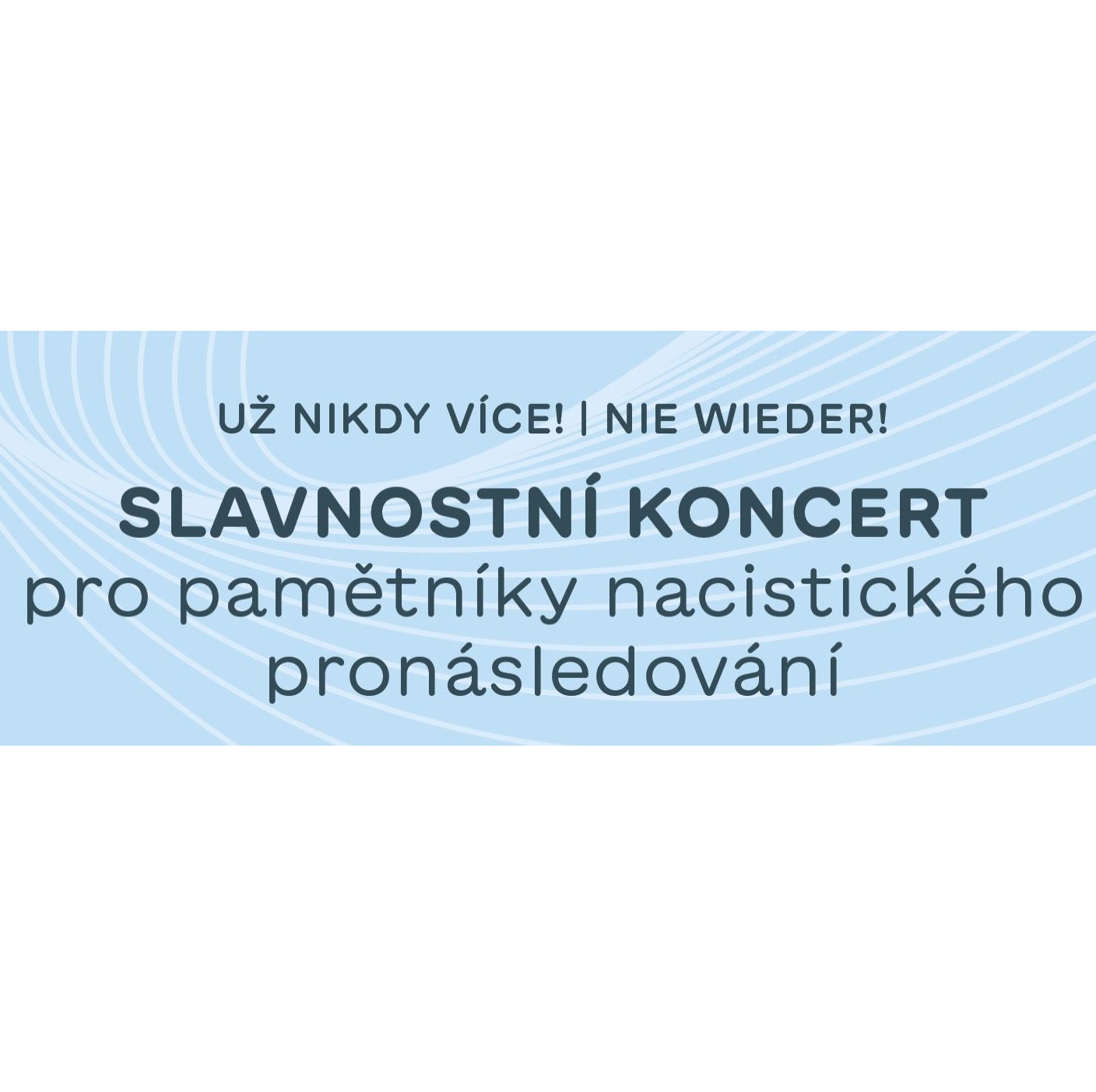
Prague, 20 May 2025: On the occasion of the 80th anniversary of the end of the Second World War, the Embassy of the Federal Republic of Germany in Prague, the Czech-German Future Fund, the Endowment Fund for Holocaust Victims, and Living Memory jointly held the concert “Never Again | Nie wieder”, dedicated to the survivors of Nazi persecution.
The concert was dedicated to Holocaust survivors and to all those who were subjected to political and other forms of persecution during the Nazi era. One of them is Michaela Vidláková, who gave a personal testimony from Terezín concentration camp and opened the concert with the following words: “The experience of war is terrifying for everyone – even for children who stayed at home, suffering from fear, deprivation, separation from their parents, and being forced to hide in the worst of conditions. There were people who actively resisted Nazism. They and their families also suffered during the war. We must realize that wars are not just stories from the past. Since the end of the Second World War, there has not been a single day or week without fighting or shooting somewhere in the world. I myself was one of those children who was incredibly lucky to survive.”
“The voices of survivors, their stories, are true treasures. Their memories serve as a warning of what can happen when those who despise democracy come to power. They are also a call to defend our European values and our freedom. At the same time, they are voices that can guide us toward a future without hatred. The shared progress of the past 80 years would not have been possible without the survivors’ reminders and encouragement. We Germans are aware of our guilt, but also of our responsibility to keep the memory of the victims of Nazism alive. We cannot change what happened, but we can strive to prevent such events from happening again — Never Again, Nie Wieder,” said German Ambassador to Prague, Andreas Künne, explaining the meaning of the event.
The central part of the evening was the musical performance “The Harmony of History”, presented by the Berlin-based project Melody of Life / Lebensmelodien. This initiative brings to the stage compositions by Jewish musicians from the years 1933 to 1945 — music that emerged in ghettos and camps during the Nazi era. The project aims not only to preserve these melodies, but also to honor the life stories of their composers, for whom music became a means of survival or a dignified farewell to the world. The program had previously been performed at the German Bundestag in Berlin and at the United Nations Headquarters in New York. The music was accompanied by readings performed by students of the Academy of Performing Arts in Prague, whose texts reflected how the war had marked the lives of the composers.
“For several generations now, the Second World War has been a chapter of history. And yet we are still in the unique position of being able to speak directly with eyewitnesses to those historic events. Those who survived Nazi terror and dictatorship can share their experiences with today’s generation. This creates a continuity — a historical and cultural memory of our nations,” reflected Rita Hagl-Kehl and Jindřich Fryč, Co-Chairs of the Board of Trustees of the Czech-German Future Fund, highlighting one of the concert’s key messages.
The Czech-German Future Fund provided compensation to tens of thousands of living victims of Nazism and forced labor at the turn of the millennium, and it continues to preserve their legacy to this day. As part of this effort, the Fund presented a series of short films featuring interviews between young people and survivors, as well as photographic portraits by Karel Cudlín.
The afternoon also included a supporting program: In cooperation with the non-profit organization Living Memory, photographer Jana Stachová created the exhibition “The Fates of Roma during the Second World War,” which presents the life stories of Roma persecuted under the Nazi regime and their fates after the war. A catalogue accompanying the exhibition was also introduced, reflecting not only its content but also the long-standing work of Living Memory in commemorating the genocide of the Roma and supporting the Roma minority. “Alongside preserving the memory of the survivors, it is equally important for us to care for the bearers of these stories – the survivors themselves and their loved ones. Given their difficult life experiences and advanced age, we as a society — and as individuals — share a moral responsibility to ensure they can live in safety and dignity,” said Darina Sedláčková, Chair of the Board of the non-profit organization Living Memory.
To mark the 80th anniversary of the end of the Second World War, the Foundation for Holocaust Victims published a collection of portraits of Holocaust survivors. “You who have gathered here today to commemorate the end of the war — a moment that meant liberation from a Nazi concentration camp — were imprisoned as children or very young people. The intent of the Nazis was for your lives to end at the very beginning, leaving behind nothing but a name, framed by two dates of a tragically short existence. Their defeat prevented those plans from succeeding, and you have since enriched the world with the fruits of your personal and professional lives. The Foundation for Holocaust Victims exists to ensure that the memory of those who did not live to see liberation is not forgotten, and to help preserve the environment in which they once lived. I, along with my fellow board members and the team at the Foundation, consider it an honour to be here with you today and to share in the joy of your presence,” said Michal Klíma, the Chairman of the Board of the Foundation for Holocaust Victims, addressing the survivors in attendance.